
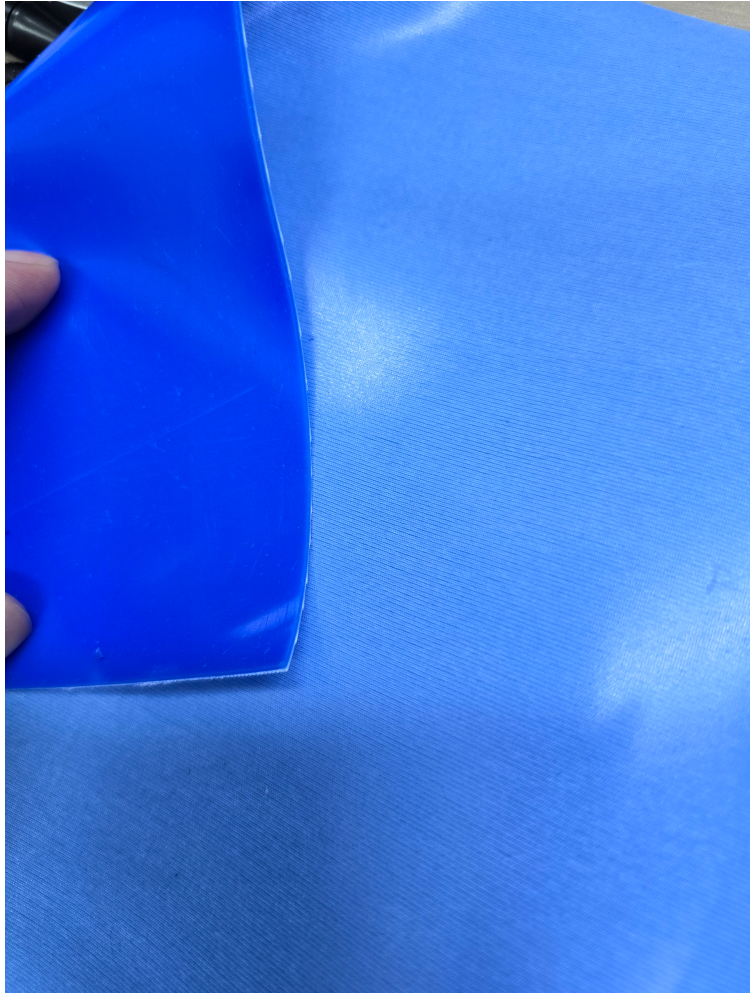
In combined environmental and vibration testing, a flexible fabric seal can close the gap between the chamber floor and the moving table, allowing the table to move while the chamber stays closed. Buyers may call this part a shaker boot, a vibration table seal or a diaphragm floor. The designs differ, so a photo of your opening is the quickest way to start.
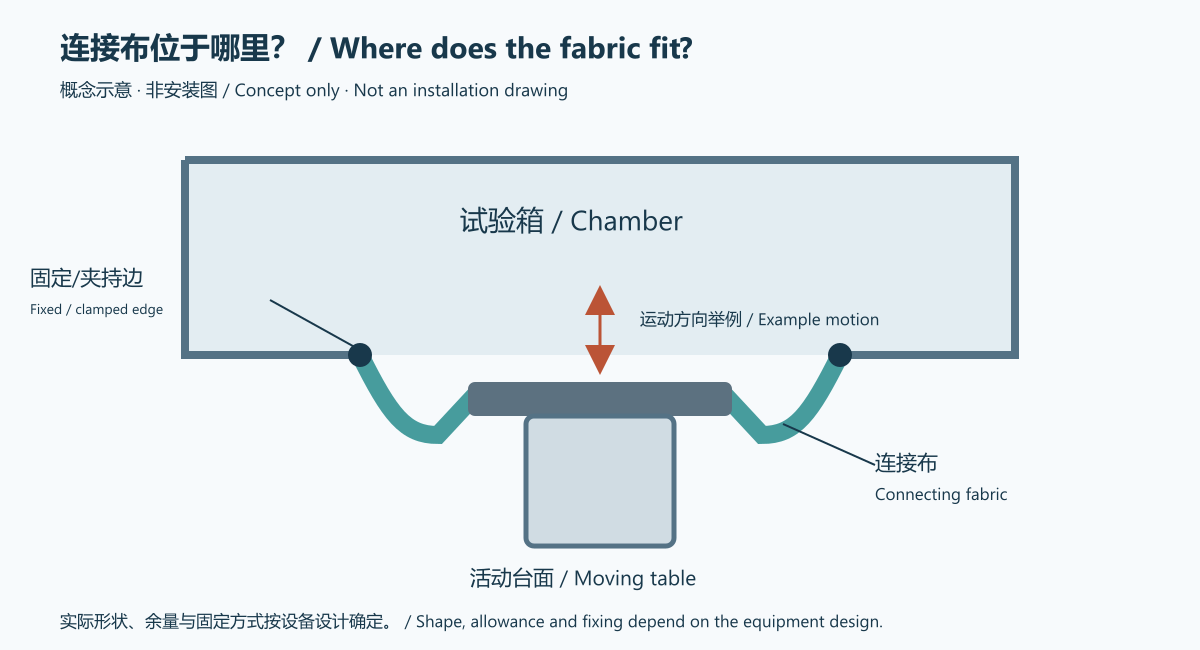
Concept diagram for material selection. The actual installation follows the equipment design.
Start with the opening and the movement
Mark the opening dimensions, the clamping positions and the available space for the fabric on a photo or drawing. Include the direction of movement, maximum travel and operating frequency.
During a trial fit, check whether the fabric becomes taut, folds repeatedly at one point or rubs against an edge.
The fixing arrangement matters too. A flat sample does not show how the installed part moves. If you are replacing a worn component, send both its unfolded dimensions and a photo of it in position.
Identify the coated face and the textile back
ADVANCETEX supplies silicone-coated elastic fabric with a synthetic-fiber textile backing and silicone on one side. The two faces can be distinguished on the actual sample.
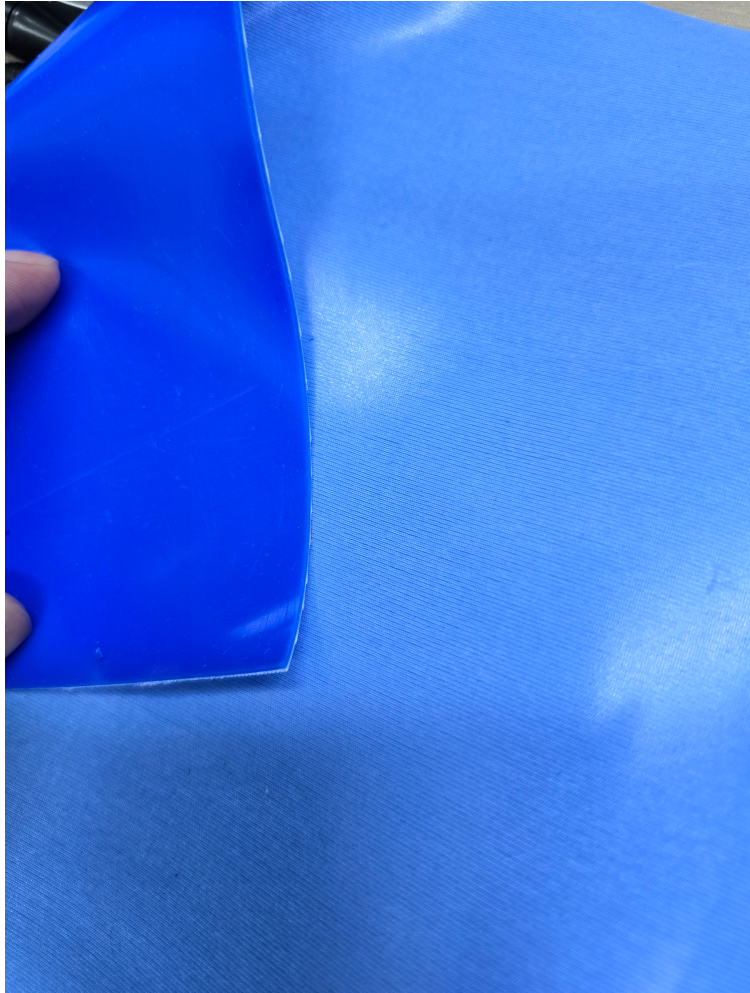
Actual sample showing the silicone-coated face and textile back.
Choose the coated-face orientation with reference to the equipment design, exposure and existing installation. Mark that orientation before cutting. Check the clamped and moving areas during the trial fit.
Compare the 0.6 mm and 1.2 mm grades in your assembly
Our available thicknesses are 0.6 mm and 1.2 mm. Both grades come in 10 m rolls, slit to the width you need. Thickness is one selection factor alongside the fixing method, available space and operating conditions. The thickness of an existing part can provide a starting point for comparison.
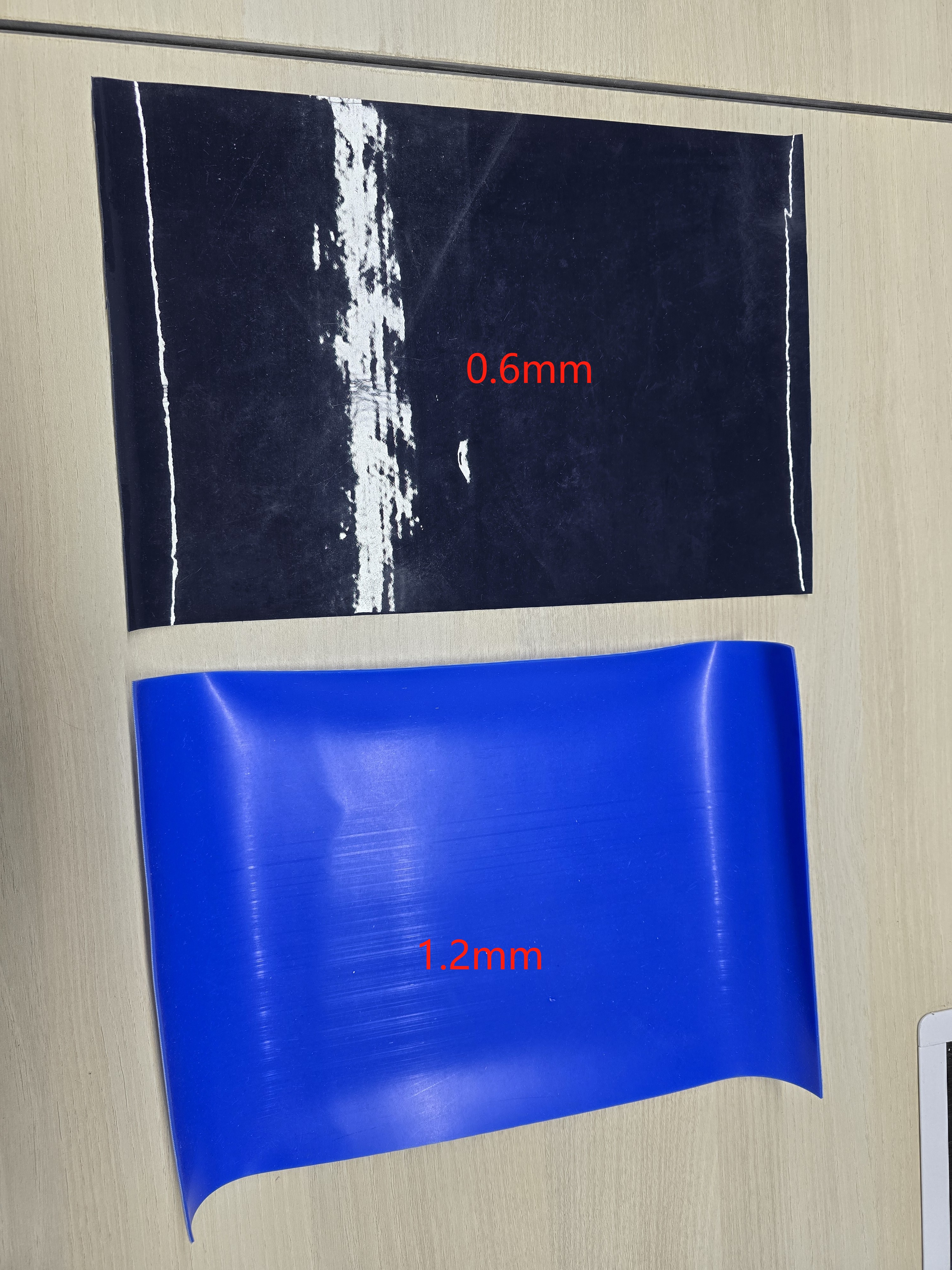
Actual 0.6 mm and 1.2 mm samples. Colours refer to the samples shown.
Stretching a sample by hand shows its faces and how it deforms. Assess allowable travel, service life and sealing performance under the actual clamping, movement and temperature conditions.
Read the temperature range as a coating specification
The stated −70°C to +260°C range is for the silicone coating. We do not have temperature data for the textile backing to offer as a specification, so this is not a rating for the whole fabric. Tell us the temperature at the fabric's position and we will suggest which samples to try.
Customers already using this fabric in environmental chambers have not reported temperature problems so far, though that is not a test of your conditions.
For sample selection, provide the temperature at the fabric's installed position, the temperature cycle, humidity and any substances it may contact. A chamber's maximum setpoint alone is not enough to describe that exposure.
Record the trial conditions and the result
Have the equipment's technical team assess the sample against its operating requirements. Useful checks include:
- Slippage at the clamps or rubbing at nearby edges.
- Local tension or repeated folding across the intended movement.
- Changes to the coating, backing and clamped areas after the planned environmental and motion tests.
- Whether the installed seal meets the equipment's own acceptance criteria.
Keep the test conditions with the results so that different thicknesses or fixing arrangements can be compared. Test duration, acceptance limits and replacement intervals should follow the equipment requirements.
Request samples with a photo or drawing
To request samples, email jacky@advancetex.co with:
- A photo or sketch of the installed position
- Opening and clamping dimensions
- Direction and amount of movement
- Temperature and humidity at the fabric's position
- If you are replacing a part: photos of both faces and its thickness
Small samples are free; the buyer covers shipping. Use the samples for an initial comparison, then confirm the specification through your assembly trial.